Table of Contents
By Layla El-Dakhakhni, with editing by Erdanya Anderson
What is Accuracy? What is Rigour?
Science requires accuracy and rigour, but how are these qualities built? Which standards ensure them, and what processes convey their stakes? How are they upheld in an anti-colonial research setting? Though never asked in so many words, these questions felt increasingly relevant over the course of my training at CLEAR.
My name is Layla El-Dakhakhni, and I am a research assistant at CLEAR and a North African & Arab settler living in the ancestral homelands of the Haudenosaunee, Anishinaabe, Mississaugas of the Credit, Chippewa, and Wendat Peoples. As an Environmental Chemistry undergraduate student at the University of Toronto, I have been training in Western science for the past several years. This past summer, I joined CLEAR’s wet lab in the ancestral homelands of the Beothuk and Mi’kmaq to train in its anti-colonial science methods.
At CLEAR, I found that my accuracy and rigour as a lab technician were directly informed by the anti-colonial values woven through the technical protocols. This felt qualitatively different from the ways accuracy and rigour are taught, negotiated, and enforced in my Western science training. It went beyond thinking through how the amount of steps in my chemical procedure might inflate my error propagation or wondering how many marks out of 10 my TA was perceiving my lab performance. Here, accuracy and rigour flowed from my direct accountability to the communities and samples with whom I was working, the community knowledge informing the methods, and the reckoning of our relationships as lab workers with and beyond the samples.
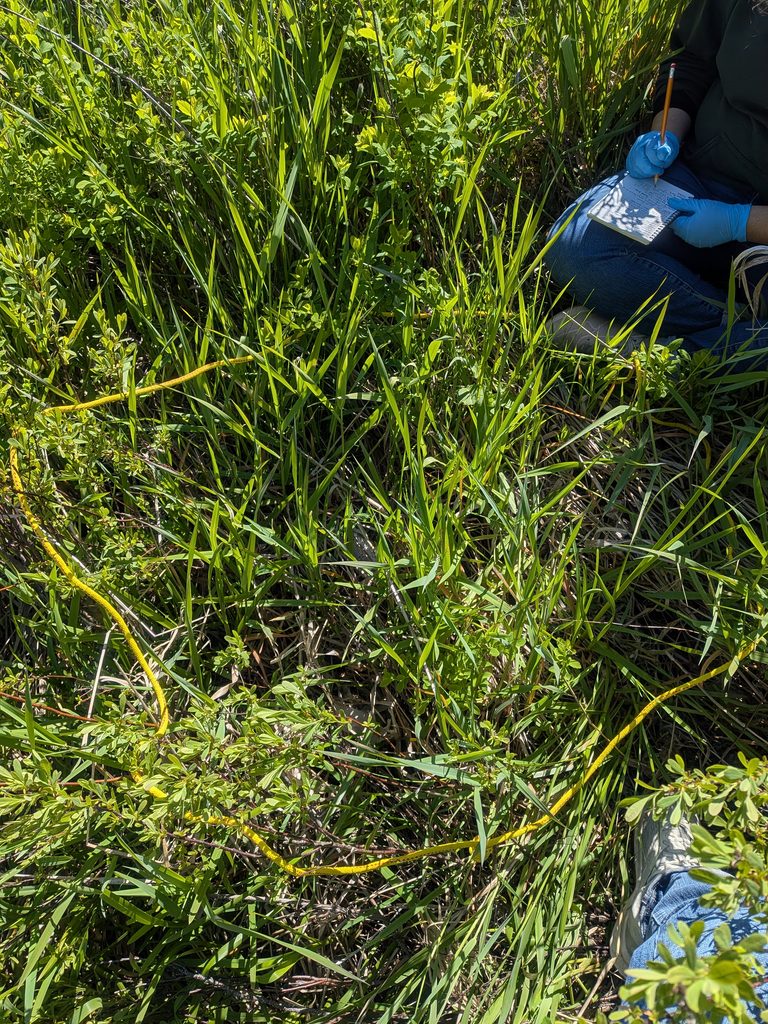
Community accountability consistently informed CLEAR’s conception of accuracy. Accountability, as identified in the CLEAR lab book (CLEAR, 2021, p. 21), is a core lab value emphasized from the first moments of my training. As Melissa and I examined suspected microplastics from a quadrat sampled during my first week, we discussed whether or not to include a suspicious rock in our count. She explained that being discerning with what we label as plastic and avoiding logging organics ensures we do not unnecessarily fearmonger communities over material that does not pose a risk. She named and made clear the stakes of the accuracy, the people it would affect, and the specific outcome a lack of care could cause.
In my science schooling, we are certainly responsible for accuracy itself, but accountability to accuracy as a broad concept is fundamentally different from the accountability to a specific community within which accuracy is one part. In school, my responsibilities flow through a much muddier set of relationships: I am accountable to my own grades, to an institution that is not (or much less) accountable to me, and to my individual professors and TAs. Across these specific relationships, accuracy is only an accountability perceived and enforced at the scale of the individual.
At CLEAR, my commitment to accuracy came from understanding my role in creating a reliable picture of how microplastics appear in food systems with direct consequences for communities’ health, culture, nutrition, etc. This is not to suggest a lack of individual oversight – CLEAR has incredibly thorough quality assurance practices. The lab intentionally plants decoy microplastics (“Waldos”) in samples to measure technicians’ overall microplastic recovery, and there are regular re-dos of even experienced technicians’ samples to mitigate error.
Nor does it imply an absence of authority, which is arguably more important in a lab intentionally intervening in science’s history of abused authority; rather, the authority is embedded in a wider collective. The consequences of accuracy are greater even if they have little to do with personal punishment or loss, and this responsibility strengthens the science. Instead of a professor’s assurance of university ethics board approval or a slide on sustainability operating separately from the “actual” science lesson, our accountabilities and their stakes were present in every stage of my technical training at CLEAR: before I touched a fish, before my first sample rematriation, through my introduction to the “For Land” bucket, through learning how to engage with the bucket itself. These steps are central to CLEAR’s protection of accuracy in its projects, and arise directly from how the lab understands and honours its spectrum of obligations.
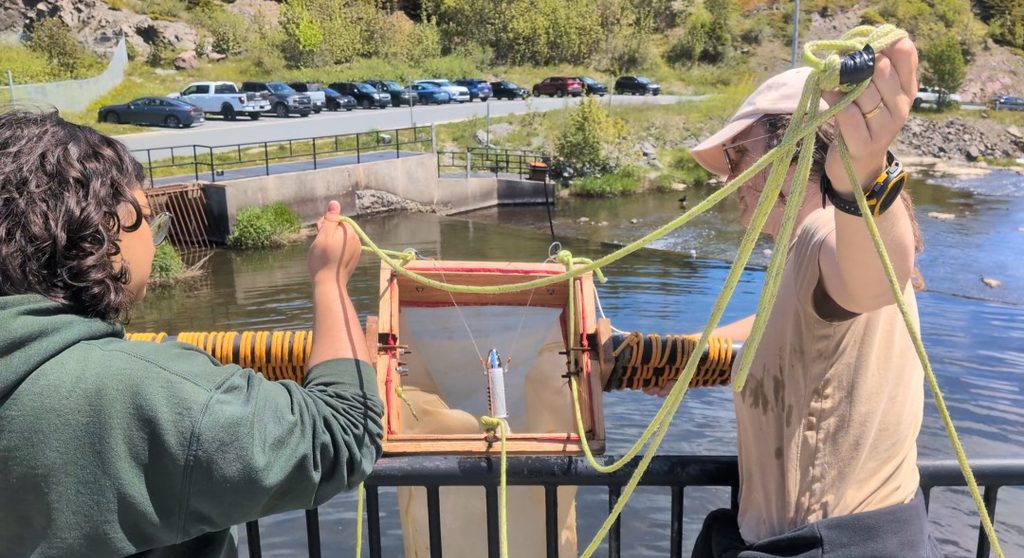
Another consistent emphasis throughout my training was how community knowledge was shaping CLEAR’s research (Liboiron, 2024). While she was training me to process a cod stomach, Melissa explained how we used the Labrador Inuit 6-season calendar to track plastic ingestion trends in these animals, whose seasonal changes are regulated by climatic, social, and species-based indicators (Cadman et al., 2025). The lab, she said, was not seeing results as significant or relevant using the Gregorian 4-season calendar and began this practice after a conversation Max had with Liz Pijogge, a Nunatsiavut Government project research partner. For example, parts of the 6-season calendar are anchored in the ice melt, which affects when plastics begin running off into surrounding waters and being consumed by fish.
Hearing this, I remember feeling struck by how new it felt not just to experience the citation of community-based knowledge inside a scientific space, but how specific the attribution was compared to what normally takes place in my classes. At school, a common expression I hear from professors sharing a scientific insight is “we know from the literature that…”. “The literature,” I came to learn, is a homogenized entity of all the peer-reviewed academic knowledge and information that scientists in a particular field have amassed. Depending on their familiarity, my professors might further cite the research group responsible, but over the years I came to understand that a major marker of success amongst scientific knowledge producers is creating insight robust enough to send off and join the amorphous blob of “literature”. This is certainly an issue for citational politics to reckon with (Crespo et al., 2026), but what stood out to me once I experienced CLEAR’s approach was how the process was divorcing scientific knowledge from its place and context of production. For CLEAR’s seasonality issue, place and context were inextricable from the information that transformed the lab’s plastic ingestion data. I wonder how much other community wisdom and memory is washed away and appropriated by this practice in Western science. CLEAR’s meticulous citational practices, community decision-making processes, and refusal to extricate knowledge from place take more time, cost more labour, and are all essential exercises in accuracy and rigour.
Homogenizing knowledge also means homogenizing values. As a plastic pollution research lab (and indeed, as any lab), part of CLEAR’s responsibilities include reckoning with its waste practices. Despite regular use in the field as a convenient strategy for dissolving biota for plastic detection, I learned CLEAR does not allow the use of potassium hydroxide (KOH) or any similar materials in the lab due to its status as Hazardous Waste (Liboiron, 2021, p. 66). I had a bit of prior experience with this standard in a lab environment: the integration of Green Chemistry principles into learning outcomes, syllabi, and assignments is a pedagogical concern of undergraduate chemistry educators, particularly in recent years. Developed in 1998 as an outcome of Rachel Carson’s Silent Spring (Bishop, 2012), Green Chemistry attempts to orient chemists towards lessening their use of environmentally hazardous materials, creating less waste from chemical syntheses, and using less energy during chemical processes, among other concerns (Anastas & Warner, 1998). This shift feels generally positive, but in ongoing discussions with my classmates, we struggle with the superficiality of these Green Chemistry interventions in our work. Besides the obvious absence of a critical reckoning with chemistry’s history as an industrial discipline (Bensaude-Vincent & Stengers, 1996), the root of this feeling was not immediately clear to me until I encountered a step in CLEAR’s lab book protocol for sample processing:
“Think about the sample. Where is it from? Who collected it? What relations does it have? You are now part of these relations as well. From this step on, be sure to treat the sample with respect, which in turn treats all of its other relations with respect.” (CLEAR, 2021, p. 126)
Like the new responsibility for accuracy that came from understanding my accountabilities to a community, pausing to consider and situate myself in relation to the cod guts in my hands introduced a whole new set of stakes for the care and concern with which I needed to approach my sample processing. It demanded something of me; it asked me to be less entitled to the animal’s presence and its contributions to my training or CLEAR’s research. Environmental toxicity is not the only reason KOH is banned at CLEAR; in Pollution is Colonialism, Max notes that “[w]orse, it [is] rude to dissolve our relatives and have them leave the lab as hazardous froth” (Liboiron, 2021, p. 66). I wondered about the guts’ future, their past, the rest of the cod’s body, and its role as an agent in the process rather than as a material.
Later, when I tried to imagine how this step in the protocol might feel in the labs I train in back home, the situation felt laughable. The level of genuine emotional processing required of this practice is not possible in the survival mode many STEM students live in, especially those of us who are disabled, racialized, visibly queer and trans, or have any justifiable protective emotional walls up within the academic space. It is not replaceable by assigning a few reflective paragraphs, which is largely how Green Chemistry shows up in our curriculum. The state of the science worker has a direct bearing on the quality and rigour of the science, including the critical ability to consider and respect the relations involved in its processes. Western science takes great pains to camouflage the people who animate it from its narratives (i.e. through writing in the passive voice, prohibiting the acknowledgement of researcher subjectivity, etc. (Gumbs, 2020, p. 10)), but ignoring the workers means erasing and neglecting dimensions of the results. This fact is noted in no uncertain terms on a sign hanging by CLEAR’s lab door:
“If you are heartbroken, exhausted, or sick, GO HOME. This job is not more important than your health. Bad days = bad science.”
In my first glances around the CLEAR space, I saw the same lab benches, fume hoods, and microscopes I had seen in many of my labs prior, but there was a chasm between my past experiences and the way CLEAR trained me to imbue its values throughout the technical elements of its procedures. These conditions came with new imperatives for me as a researcher, new modes of interpreting and practicing science, and revealed invisibilized values producing the science of my previous training. I came to understand and engage with many more dimensions of accuracy and rigour than I had known. Gratitude to the lab, communities, fish, and Land for these gifts.
[Further thanks to Melissa, Erdanya, Sydney, Jess, Riley, Max, LADI, and every CLEAR member for your commitments, support, and genius. It was an honour to work with and learn from you.]
References
Anastas, P. T., & Warner, J. C. (1998). Green Chemistry: Theory and Practice. Oxford University Press.
Bensaude-Vincent, B., & Stengers, I. (1996). A History of Chemistry. Harvard University Press.
Bishop, R., and Lindblom, K. (2012, October 26). Legacy of Rachel Carson’s Silent Spring. American Chemical Society. https://www.acs.org/education/whatischemistry/landmarks/rachel-carson-silent-spring.html
Cadman, R., Saunders, M., Andersen, C., Bishop, B., Pamak, C., Pijogge, L., Tuglavina, E., Winters, J., Bailey, M., Laing, R., Oliver, E., & Goudie, J. (2025). All kinds of seasons: articulating Labrador Inuit governance through crafting a seasonal calendar. Arctic Science, 11, 1-13. https://doi.org/10.1139/as-2025-0037
CLEAR. (2021). CLEAR Lab Book: A living manual of our values, guidelines, and protocols, V.03. St. John’s, NL: Civic Laboratory for Environmental Action Research, Memorial University.
Crespo, C., Liboiron, M., Flynn, A., Rivers, M., Cotter, R., Liu, R., Lombeida, D., Hawkins, K., Duman, N., Arif, A., Allen, E., Healey, N., Power, N., Zahara, A., Atkinson, J., McCarney, P., Mather, C., Cafferty, R., & Vuleta, L. (2026). Struggling with citational politics as a pathway to unlearning and relearning for collective action. KULA: Knowledge Creation, Dissemination, and Preservation Studies, 9(1), 1-16. https://doi.org/10.18357/kula.314
Gumbs, A. P. (2020). Undrowned: Black feminist lessons from marine mammals. AK Press.
Liboiron, M. (2021). Pollution is Colonialism. Duke University Press.
Liboiron, M. (2024, August 14). Freezer-led plastic sampling design in Nunatsiavut. Civic Laboratory for Environmental Action Research. https://civiclaboratory.nl/2024/08/14/freezer-led-plastic-sampling-design-in-nunatsiavut/