Table of Contents
Since 2017, the Nunalinni kamatsianik palastikkinik project has brought together Inuit harvesters, community members, researchers, and institutional partners to understand plastics in Nunatsiavut lands and waters. Co-led by Liz Pijogge (Nunatsiavut Government) and Max Liboiron (Memorial University), and grounded in community-based environmental monitoring, the project focused on plastics in wild food, alongside shoreline, surface water, snow, and ice. Over 250 people contributed to this work, sustaining one of the most comprehensive, community-driven plastics projects in the Arctic to date.
All data gathered through this project are owned and controlled solely by the Nunatsiavut Government.
Taimanganit 2017, tainna Nunalinni kamatsianik palâstikkinik suliangujuk katuitisimajuk Inuit katitsuijinnik, nunalimmiunik, Kaujisattinik, ammalu suliaKapvini ikajuttigejunut tukisigiamut palâstikkinik iluani Nunatsiavut nunanginni amma imâni. SivukkatigeKatausimajuk Liz Pijogge (Nunatsiavut kavamanga) ammalu Max Liboiron (Memorial Ilinniavitsuanga), ammalu iniKatlutik nunalimmi-ilinganiKajumut avatiliginimmik kamatslutik, tânna suliangujuk takunnâlualauttik palâstikkinik iluni niKituKannik, sitjani, imaup Kângani, aputik, ammalu sikunni ottugatlutik. Ungatâni 250 inuit tunitsilauttut tâpsumunga suliatsamut, sakKijâtitsitlutik anginippaumik, nunalimmit-pisimajumit palâstikkinik suliatsamik iluani Ukiuttattumi ullumimut.
Ilonnait Kaujigatsait katitsutausimajut tâpsuma suliatsakut namminigijauvuk Nunatsiavut kavamakkunut.
The partnership for this project has ended, and it is now solely in the hands of the Nunatsiavut Government. If you have questions about the logistics or methods of the project, please contact Max Liboiron. If you would like information about the project’s status or data, please reach out to the Nunatsiavut Government’s Land and Natural Resources Department.

Final Research report
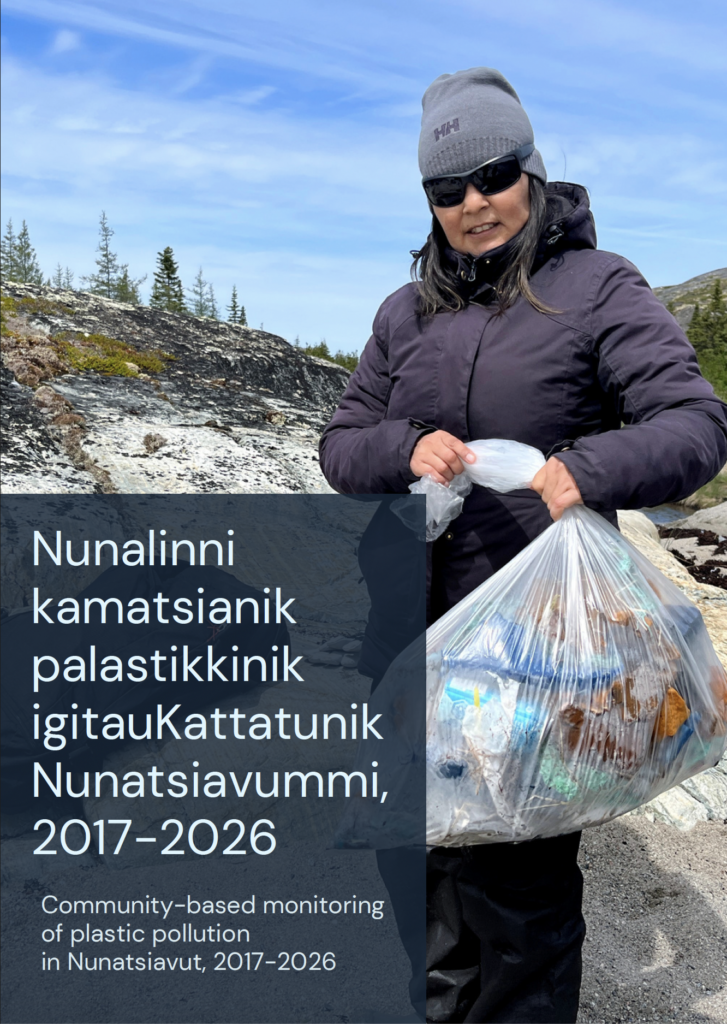
This report details findings from nearly 3,000 samples for monitoring plastics across the Labrador Inuit Settlement Area in animals, surface water, shorelines, ice, snow, and drinking water over nine years. Community collaborative analysis, collective authorship, and shared decision-making shaped both the research process and the form of this report.
Download the report by section
Transfer of project leadership: 230
Introduction and overview of results: 6-43
Baselines for plastic monitoring in Nunatsiavut: 44-61
Methods and collaboration: 63-92
Community-based quantitative methods: 256-285
Summary of results by place: 93-111
Plastic ingestion by animals:112-153
Plastics in surface water:154-171
Plastics in ice, snow, and drinking water: 172-179
Plastics on shorelines:180-195
Comparison of plastics in Nunatsiavut to similar places: 218-229
Films
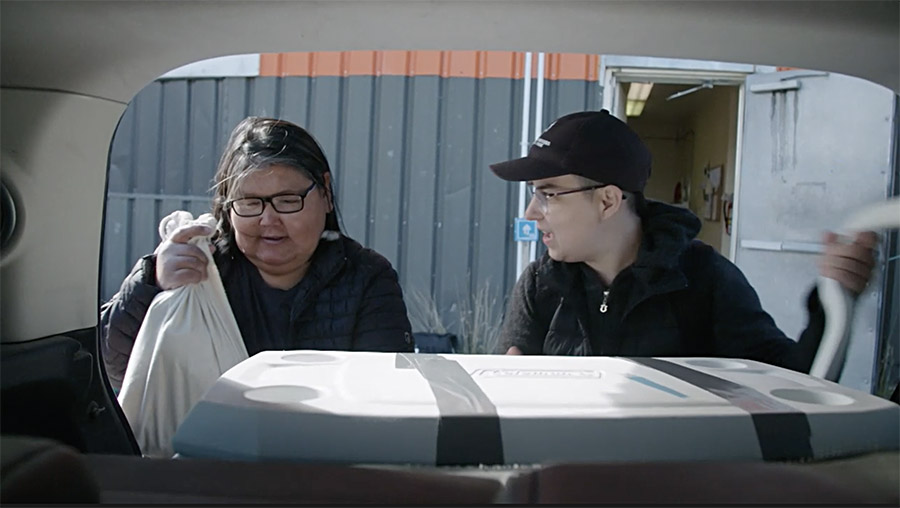
This work is featured in niKet (food) (2022), a short, documentary episode in a series about Indigenous culture in Newfoundland and Labrador on CBC Gem.
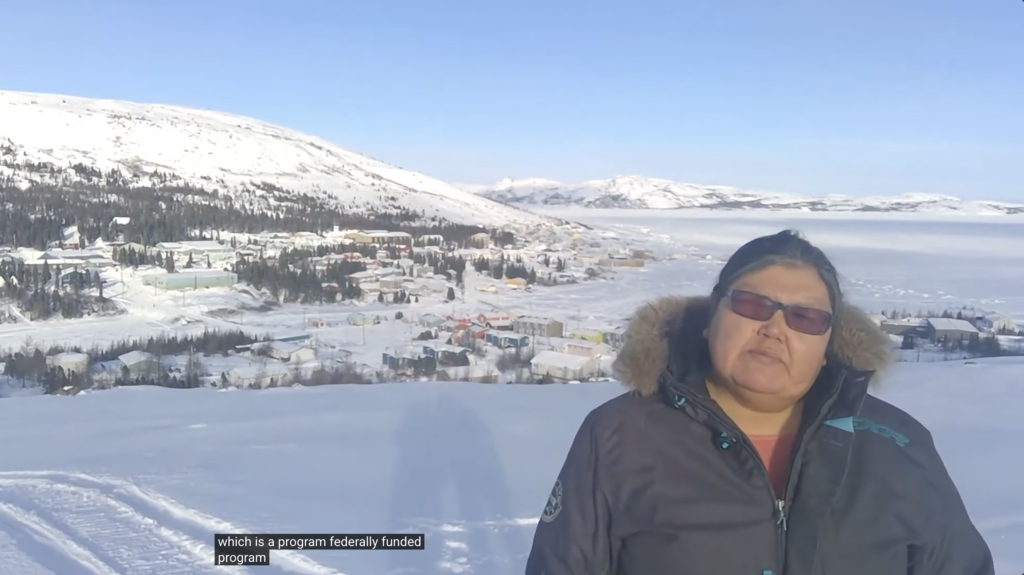
In SuliaKaKatigelluta: Community monitoring of plastic pollution in Nunatsiavut (2021), Max and Liz talk about how they do partnered research together. Produced by Couple3 Films.
Papers and Reports
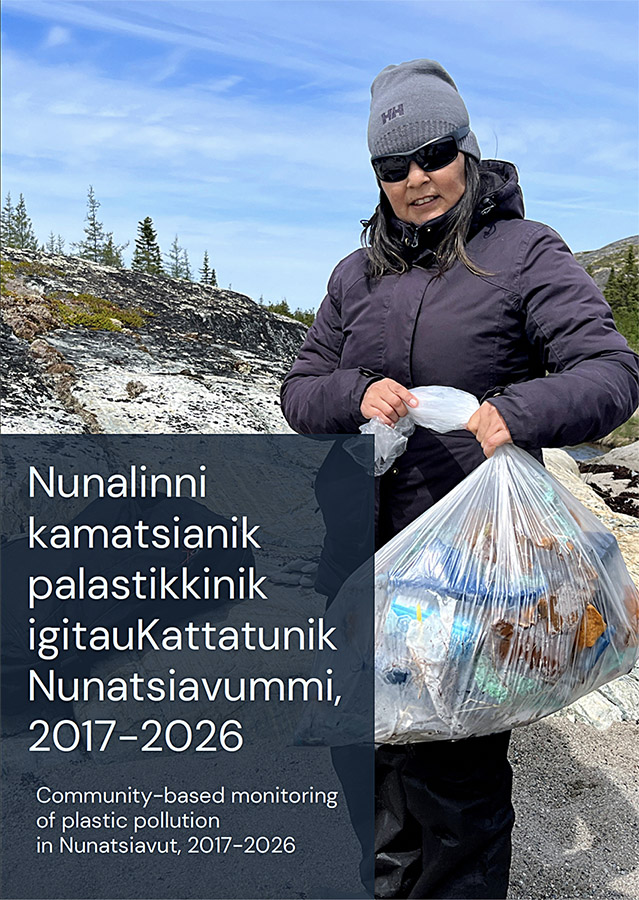
Pijogge, Liz, Max Liboiron, Katrina Anthony, Elizabeth Tuglavina et al. (2026). Nunalinni kamatsianik palastikkinik igitauKattatunik Nunatsiavummi, 2017-2026 (Community-based monitoring of plastic pollution in Nunatsiavut, 2017-2026). Civic Laboratory for Environmental Action Research (CLEAR), Memorial University
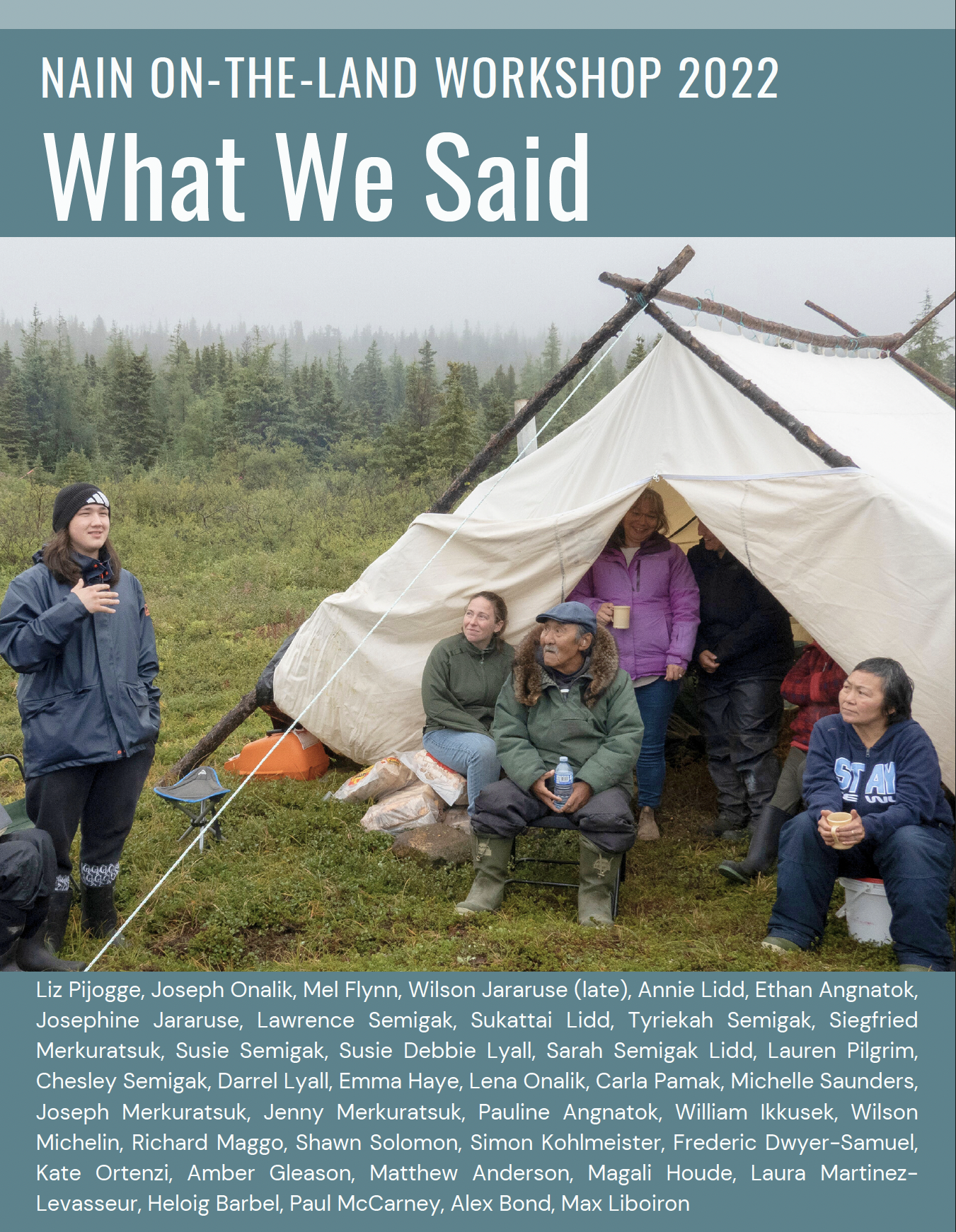
Pijogge, Liz; Onalik, Joseph; Flynn, Mel; Jarause, Wilson; et al. (2024). Nain On The-Land Workshop 2022: What We Said. Nunatsiavut Government; Civic Laboratory for Environmental Action Research (CLEAR), Memorial University; Natural History Museum.
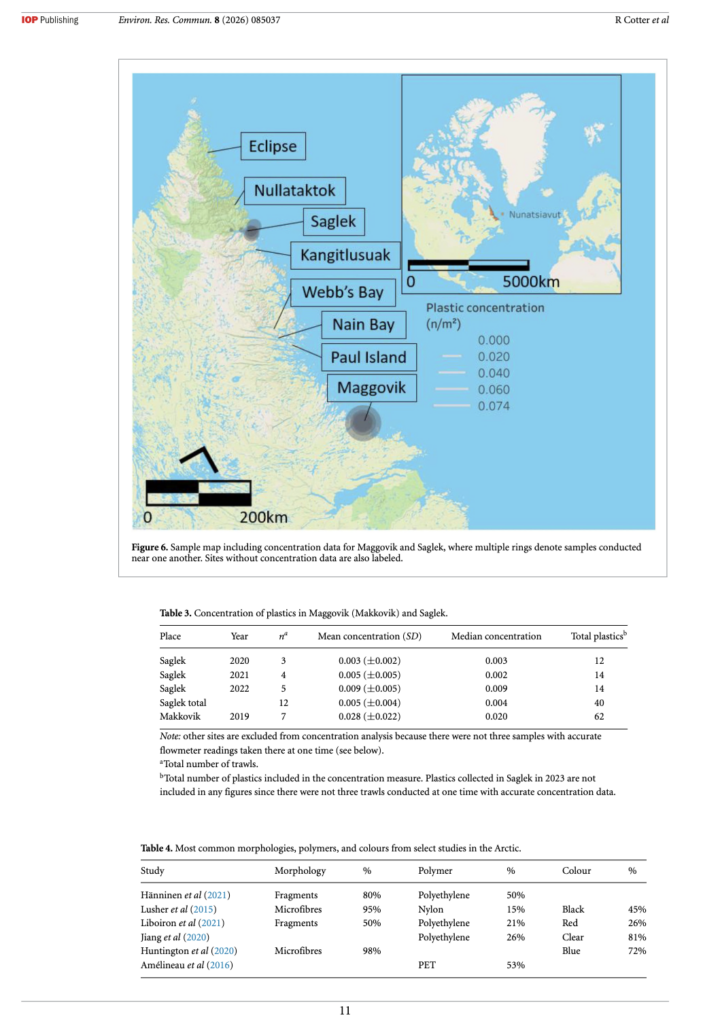
Cotter, Riley, Max Liboiron, Paul McCarney, Lauren Pilgrim, et al. (2026). “Place-by-place analysis as ideal representations of surface water plastics in Nunatsiavut, Labrador, Canada.” Environmental Research Communications 8.
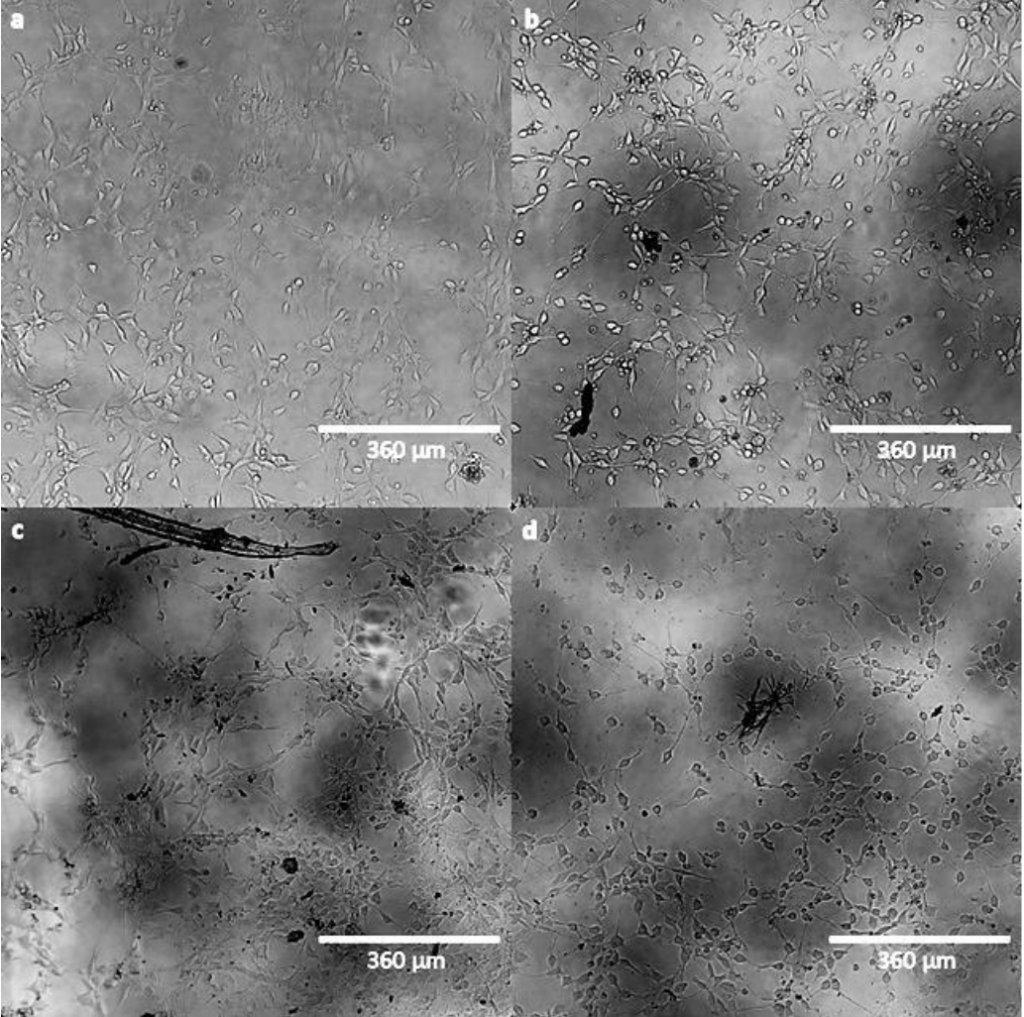
Maan, Zeina, Sadman Sakib, Zygmunt J. Jakubek, Shan Zou, Elizabeth Tuglavina, Liz Pijogge, and Max Liboiron. (2025). Multifaceted Analysis of Micro/Nanoparticles in Hopedale’s Snow: Comprehensive Characterization, Cellular Assessments, and Implications for Environmental Health. National Research Council of Canada. Metrology Research Centre. 30 pp.

Liboiron, Max, and Liz Pijogge. (2025). Standard Western science measures for environmental monitoring do not necessarily serve Indigenous research priorities: Making good numbers in Nunatsiavut plastic monitoring, Indigenous Computational Futures Workshop: 1-12.
Media coverage
- “Arctic Museum’s New Show Highlights Food Challenges Faced by Inuit Communities,” Peary MacMillan, Bowdin (print). April 13, 2026.
- “Researching plastic pollution in the Arctic through Inuit-led collaboration,” National Research Council (print). July 28, 2025.
- “How researchers can use justice-oriented approach when working with Indigenous groups,” Anasophie Vallee, Penticton Herald (print). February 20, 2025.. Reposted on NationTalk.
- “This Land is changing,” Heidi Atter, CBC News (print), January 12, 2025.
- On plastic pollution research in Nunatsiavut and the UN Plastics Treaty, with Liz Pijogge, John Gaudi, Labrador Morning Show (radio), April 22, 2024.
- “Inuit at the UN Plastic Talks,” Lisa Koperqualuk, The Hill (print), April 4, 2024.
- Makkovik plastic identification workshop, Joanna Lidd, OKâlaKatiget Society Web Radio (radio). August 15, 2023.
- “Looking for an Arctic approach to plastic pollution,”GRID-Arednal (print), March 9, 2021.
Blogroll
- The Problem With Averages: What Plastic in Birds Teaches Us About Statistical Ethics, Max Liboiron and Alex Bond, June 30, 2025
- From Random to Relevant: Community-based sampling designs, Max Liboiron, September 18, 2025
- Community Research Authorship and Attribution in Nunatsiavut: First Steps, by Katrina Anthony, Geraldine Andersen, James Jacque, Debbie Lyall et al., February 26, 2025
- History of history, by Alana Derry, January 3, 2025
- Freezer-led plastic sampling design in Nunatsiavut, Max Liboiron, August 24, 2024
- Reflections on the Makkovik plastics identification workshop, August 31, 2024
Resources
- Indigenous Data Sovereignty contract to ensure Nations retain the rights to their data during university-partnered research projects.
- Protocols for collecting animal samples for plastic ingestion research
- Protocols for collecting feathers for trace metal analysis
- Principles of authorship and attribution for community based research
Photos


